Technologies
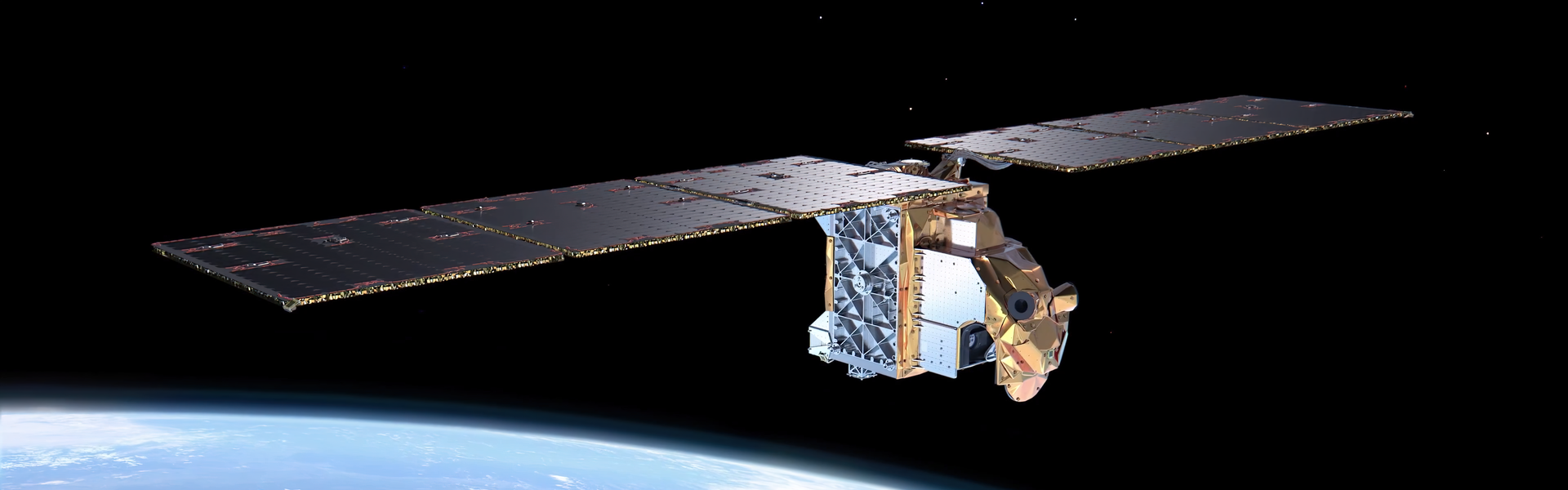
To maximise the value of EO supporting the Blue Economy, the next wave of technical advances are beginning to reshape how marine data is collected, analysed and applied. These innovations are not only expanding the scope of EO applications but also making them more accessible, responsive, and impactful for diverse maritime stakeholders. From AI-driven analytics and autonomous monitoring platforms to next-generation satellite missions and digital twin technology, the technical landscape is evolving rapidly to meet the demands of sustainable ocean management and maritime innovation:
AI and Machine Learning Integration
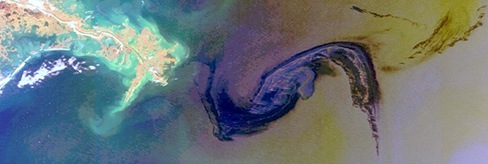
AI models trained on Sentinel and commercial satellite datasets are now routinely used to classify vessel types, detect pollution, and model coastal erosion.
Learn More >
AI and Machine Learning Integration
AI models trained on Sentinel and commercial satellite datasets are now routinely used to classify vessel types, detect pollution, and model coastal erosion. Projects like AI4Copernicus and AI4COPSEC are applying these techniques to support maritime surveillance, search and rescue, and pollution enforcement. Federated learning and Explainable AI methods ensure insights are scalable and trustworthy.
In-Situ Platform Integration
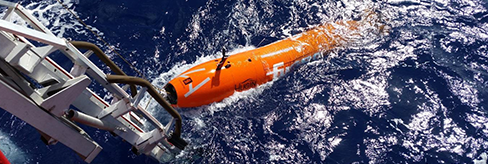
Autonomous platforms like Saildrone, AutoNaut, and HUGIN AUVs are now co-deployed with satellite monitoring to enrich EO datasets.
Learn More >
In-Situ Platform Integration
Autonomous platforms like Saildrone, AutoNaut, and HUGIN AUVs are now co-deployed with satellite monitoring to enrich EO datasets. This combined approach allows real-time calibration and validation of satellite products, critical for areas with cloud cover or optical noise. For example, Saildrones have been used to validate Sentinel-3 SST data during extreme weather events, while gliders from GROOM II improve ocean subsurface models that support fisheries and ecosystem analysis.
Advanced Data Fusion and Analytics
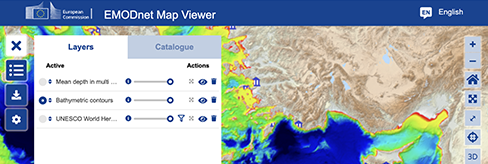
New platforms can ingest, harmonize, and analyse EO, AIS, radar, and in-situ data simultaneously.
Learn More >
Advanced Data Fusion and Analytics
New platforms can ingest, harmonize, and analyse EO, AIS, radar, and in-situ data simultaneously. Tools developed under the Blue-Cloud and SeaDataNet initiatives allow users to run virtual labs, blending ocean productivity indicators, climate variables, and socio-economic data. These are essential for Blue Economy sectors that must balance economic growth with environmental thresholds.

Emerging Satellite Missions
CIMR will improve microwave radiometry for Arctic sea-ice and salinity monitoring.
Learn More >
Emerging Satellite Missions
CIMR will improve microwave radiometry for Arctic sea-ice and salinity monitoring; CO2M will directly measure industrial emissions over oceans; and ROSE-L’s L-band SAR will penetrate canopy and ocean fog for improved maritime situational awareness. Together, these missions significantly expand the operational utility of EO for marine resource monitoring and compliance.
Digital Twins of the Ocean
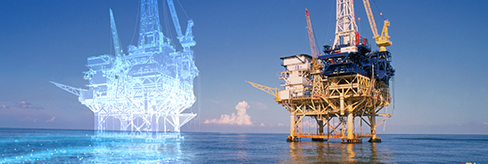
ESA and EU’s Destination Earth initiative is developing Digital Twins that allow real-time simulations of ocean state and human impact.
Learn More >
Digital Twins of the Ocean
ESA and EU’s Destination Earth initiative is developing Digital Twins that allow real-time simulations of ocean state and human impact. Marine Digital Twins, powered by EO and high-performance computing, will help simulate scenarios such as port expansion, pollution dispersal, and biodiversity shifts under climate change. SEADITO and TwinShip are directly contributing to this vision by modelling socio-ecological feedback loops and smart shipping corridors.

Impact Measurement and Blue Economy Metrics
EO is increasingly linked to sustainable development indicators. From tracking Sustainable Fisheries (SDG 14) to Carbon Flux (SDG 13), and coastal community resilience.
Learn More >
Impact Measurement and Blue Economy Metrics
EO is increasingly linked to sustainable development indicators. From tracking Sustainable Fisheries (SDG 14) to Carbon Flux (SDG 13), and coastal community resilience, EO platforms now offer quantified outputs that can be embedded into national Blue Economy plans and industry ESG frameworks. With open APIs and interoperability standards, EO-derived metrics can be integrated into public dashboards, investment tools, and insurance models.
By combining these innovations, the Atlantic Maritime Innovation Clusters have the potential to unlock a powerful foundation for a future-proofed, data-driven Blue Economy — resilient to shocks, informed by science, and economically inclusive.